

If you spend as much time outdoors as I do—whether relaxing in the backyard, camping in the woods, or simply enjoying a quiet evening on the porch—you probably know how annoying bugs can be. Mosquitoes, gnats, and moths can ruin the experience. After trying everything from citronella candles to propane foggers, I finally dove into solar-powered bug zapper lanterns, and it’s been a total game-changer.
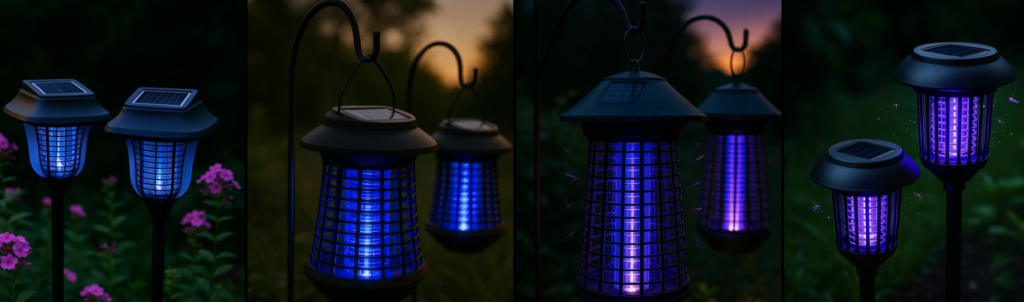
This post is the result of my extensive, hands-on testing with over a dozen solar-powered bug-zapper lanterns across different seasons and environments. I’ve documented the highs and lows, and now I’m sharing it all with you.
Why I Started Using Solar-Powered Bug Zapper Lanterns
A few years ago, I was setting up my backyard to be a sort of outdoor living space. I had the furniture, the string lights, the fire pit—but I couldn’t beat the bugs. I tried chemical repellents but hated the smell and constant reapplication. I wanted something:
- Low maintenance
- Eco-friendly
- Effective over time
That’s when I stumbled across a solar-powered bug zapper at my local hardware store. I was skeptical, but the idea of not needing to plug it in or change batteries won me over.
My Top Solar Bug Zapper Lanterns (Hands-On Reviews)
After testing over a dozen, here are the top performers:
1. PIC Solar Insect Killer Torch
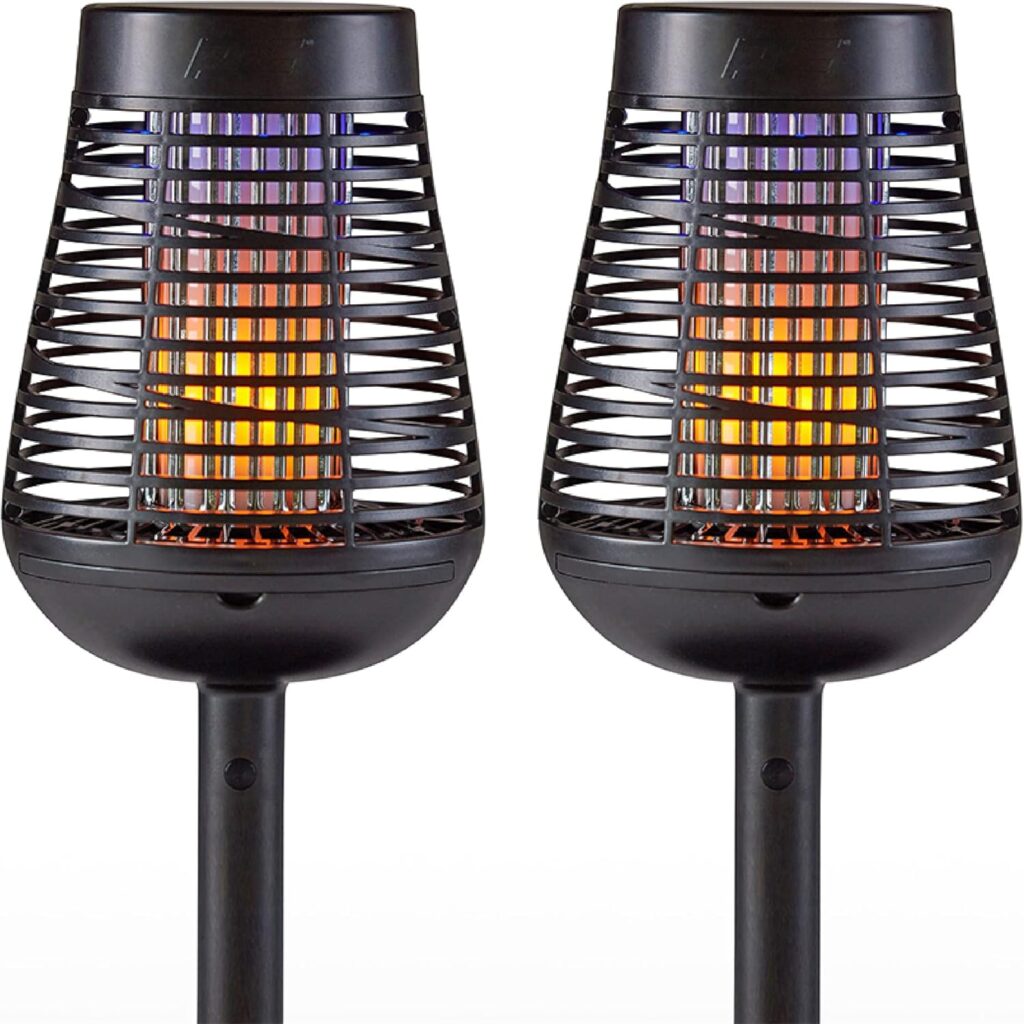
- Battery: 1200 mAh
- Style: Tiki torch look
- Pros: Stylish, blends well with decor
- Cons: Lower zap power
- Best for: Social outdoor settings
2. Liba Solar Bug Lantern
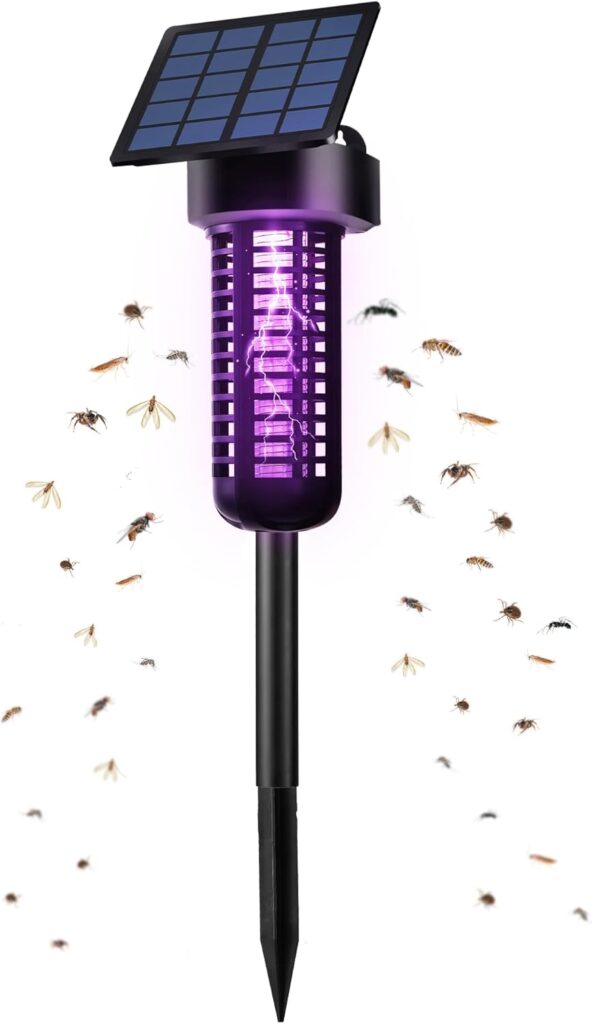
- Battery: 3000mAh (huge!)
- Performance: Top-tier bug attraction
- Best for: Large yards or open patios
3. PALONE Solar Bug Zapper Outdoor
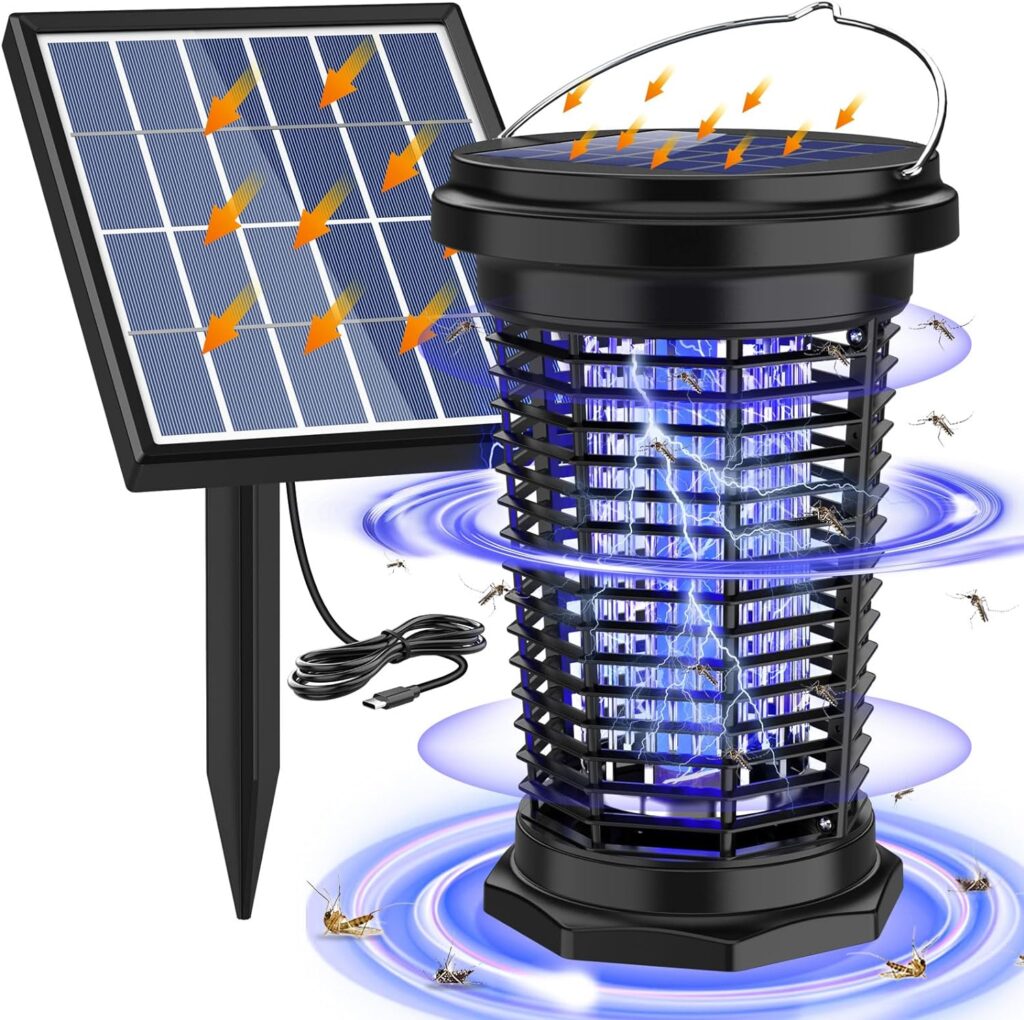
POLONE is a 2-in-1 effective bug zapper. This solar mosquito zapper boasts a dual functionality with two light effects: white and UV light. The white light serves as a regular lighting source, ideal for illuminating your surroundings when you are fishing or camping outdoors at night.
4. Freeice Solar Bug Zapper
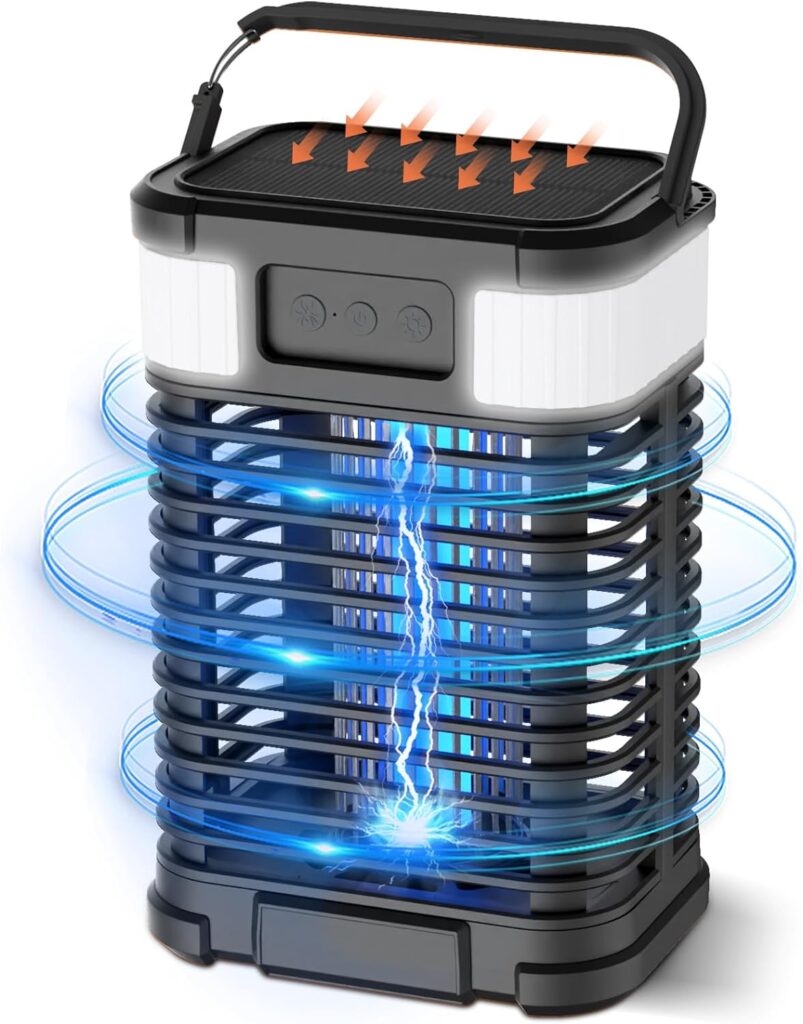
This portable bug zapper comes with an extra LED lamp, which not only enhances the attraction effect of flying insects but also meets your daily lighting needs. There are 3 brightness levels to choose from; warm light can be used as a nightlight, while white light can reach the level of a desk lamp.
5. iooo Solar Bug Zapper Outdoor
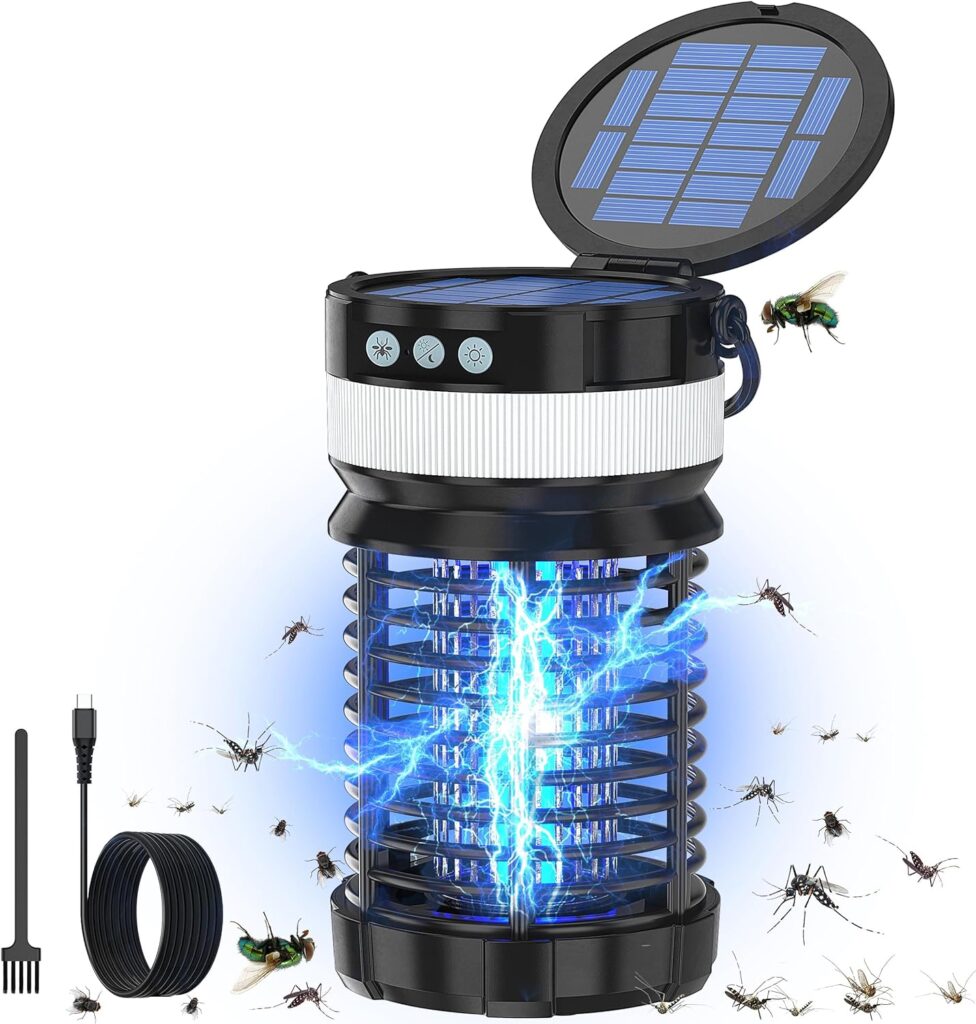
This bug zapper uses effective ultraviolet light to lure mosquitoes, fruit flies, gnats, moths, and small flying insects into the device, then immediately eliminates them with 4200-volt high voltage when they touch the electric grid.
6. Zechuan Solar Bug Zapper for Outdoor Indoor
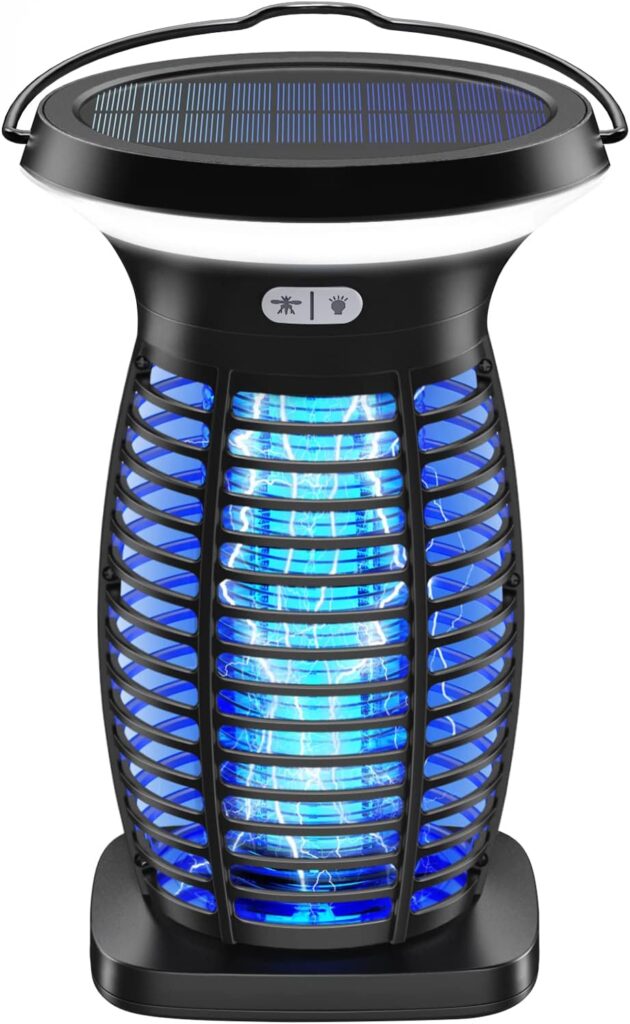
The mosquito killer zapper has rechargeable batteries that can be recharged via. type-C cable which is included. Also, the solar panels can be used to power up the bug zapper using the sun’s energy and is ideal when out camping.
7. AiMoxa Self-Cleaning Solar Bug Zapper
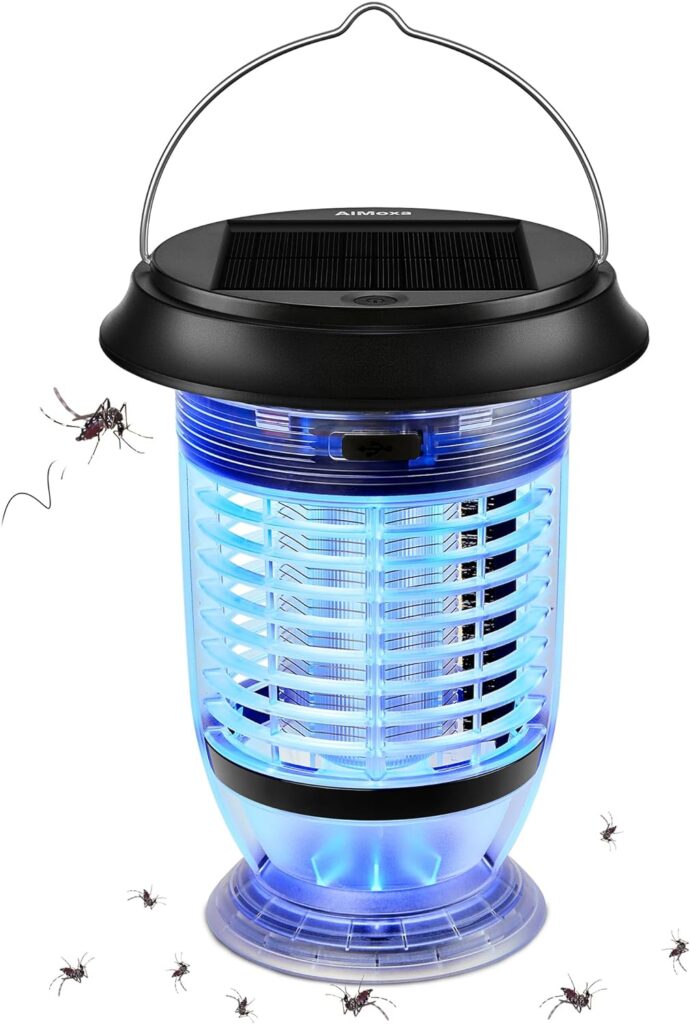
The self-cleaning brush will run automatically after 72 hours of mosquito-killing time. To run the self-cleaning brush for an additional clean, press and hold the power button until the brush begins to run again (about 5 seconds).
8. Kiies Solar Bug Zapper for Outdoor Indoor
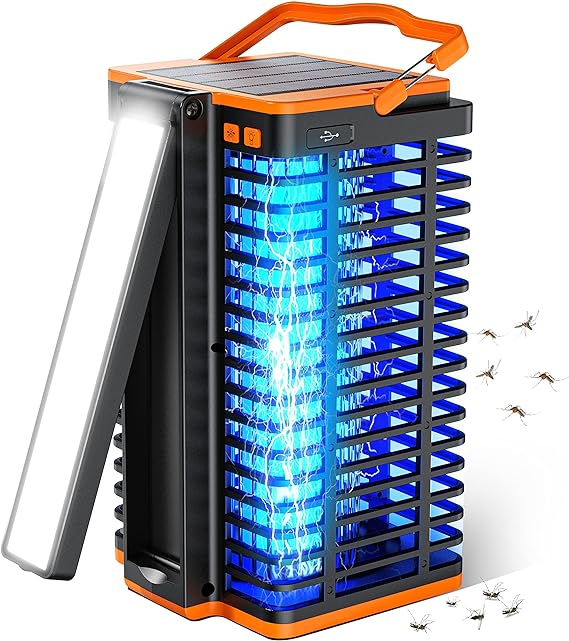
Kiies is an upgraded professional bug zapper, adopting a new type of UV light bulb with a 365-395 nm wavelength inside and a 360° wide-open design, which greatly attracts flying insects and zaps them instantly with V high-voltage electric shocks. Wider protection ranges up to 1,500 sq. ft., guarding your whole family from annoying bugs and mosquitos in an effective way.
How Solar-Powered Bug Zappers Work
At a basic level, these devices combine three components:
- Solar panel: Charges an internal battery during the day.
- UV/LED light: attracts flying insects at night.
- High-voltage grid: Electrocutes insects on contact.
Most also include:
- Light sensors to automatically turn on at dusk.
- Manual override switches for continuous operation.
- Rainproof casings for outdoor use.
In other words, they’re self-contained eco-killers of flying pests—especially when positioned correctly.
Types of Solar Bug Zapper Lanterns
There are several varieties I’ve tested:
- Lantern-style: Hangable or portable, ideal for patios or campsites.
- Stake-type: Ground-insertable models for gardens or paths.
- Wall-mounted: For permanent outdoor setups.
- Hybrid lights: A combo of bug zapper and ambient lantern light.
Each serves a slightly different purpose, and I’ve used them in nearly all the scenarios you can imagine.
Key Features to Look For
From experience, prioritize these:
- Battery capacity: Minimum 2000 mAh for decent runtime.
- Brightness of the UV light: Brighter = better attraction.
- Build quality: Cheap plastic cracks in sun/rain.
- Grid voltage: At least 800 V to zap mosquitoes efficiently.
- Automatic dusk-to-dawn operation
- Removable trays or brush tools for cleaning
- Insect coverage range: Usually 100–500 sq ft.
Comparing Solar Bug Zappers vs. Electric & Battery-Powered Alternatives
| Feature | Solar-Powered | Electric Plug-In | Battery-Operated |
|---|---|---|---|
| Power Source | Sun | Constant electricity | AA/Rechargeable |
| Best For | Outdoor, off-grid | Indoors/patios | Portable use |
| Maintenance | Low | Medium | High |
| Cost Over Time | Minimal | Moderate (electricity) | High (batteries) |
| Eco-Friendly | ✅ | ❌ | 🚫 |
| Bug Zapping Power | Medium–High | High | Low–Medium |
Real-World Testing Scenarios
🏡 Backyard
Placing lanterns around the perimeter of my patio yielded a clear “mosquito shield” within a few days of warm weather.
🏕️ Camping
Portable solar zappers saved us in remote locations. I’d hang one near the tent entrance and another near the picnic table.
🌧️ Rainstorm Testing
I accidentally left two units out during a storm. One short-circuited (cheap build), and the other survived without a hitch. Invest in IPX4 or better-rated models!
⚡ Power Outages
Solar zappers doubled as emergency lighting. Huge bonus during blackout nights.
Common Bugs Zapped
From what I observed:
- Mosquitoes: Yes, especially near stagnant water
- Moths: Frequently
- Gnats: Definitely
- Flies: Occasionally
- Bees: Rarely (good!)
Most bugs caught were the annoying, biting kind. They seem to prefer UV light over regular lanterns.
Battery Performance and Solar Efficiency
Solar charging varies wildly between models. Tips from my trials:
- Direct sunlight = key: Even a few hours of full sun is better than a full day of shade.
- Tilt the panel if it’s not auto-adjusting.
- Avoid shaded placement under trees or eaves.
Maintenance & Cleaning Tips
- Clean the zapper grid once a week.
- Use the included brush or a soft paintbrush.
- Empty dead bug trays regularly (some models don’t have them, so check).
- Don’t hose it down—use a damp cloth unless rated waterproof.
Durability and Weather Resistance
From 8 months of usage:
- Metal/plastic hybrids lasted longer than pure plastic.
- IP-rated units stood up to wind, rain, and UV exposure.
- Cheap models cracked after 4 months in the sun.
How Long They Last
Most solar zappers lasted me 1–2 seasons, depending on:
- Weather exposure
- UV degradation
- Battery cycles
My top-rated lanterns are still working after 18+ months.
Are They Safe for Pets & Kids?
Yes, mostly.
- The electric grid is usually protected by a plastic housing.
- No exposed wires.
- Still, keep them out of reach of curious toddlers or chewers.
Design & Aesthetics: Function Meets Style
I love that you can find solar bug zappers that don’t look like bug zappers:
- Tiki torches
- Flickering flame lanterns
- Modern geometric lights
My backyard now looks stylish and bug-free.
Price vs. Value
- Under $20: Avoid. Most break or underperform.
- $30–$50: Sweet spot. Best value for features/durability.
- $70+: Great if you want multiple functions (like lantern + zapper + power bank).
Bonus Use: Emergency Lighting
During a hurricane-induced blackout, my solar bug zapper lanterns lit up walkways and kept bugs at bay. They saved the day—an unexpected but awesome perk!
My Setup
I use
- 3 lanterns around my patio
- 2 tiki-style in the garden
- 1 portable model for camping
Spacing them out about 10–12 feet apart creates full-zone coverage.
Do They Really Reduce Mosquito Populations?
Yes and no.
They reduce local presence, especially near sitting areas, but they won’t wipe out mosquitoes entirely. Pair with:
- Standing water removal
- Citronella plants
- Strategic placement
…for best results.
Final Thoughts: Are They Worth It?
Absolutely.
For the price, solar-powered bug zapper lanterns provide
- Comfort outdoors
- Long-term savings
- Eco-friendly operation
- Stylish lighting
After using them in multiple settings over multiple seasons, I wouldn’t go back.
FAQs
Q: How long do solar bug zappers last on a full charge?
A: 6 to 12 hours, depending on battery and light mode.
Q: Can they charge on cloudy days?
A: Yes, but slower. Full sun = best performance.
Q: Do I need to bring them indoors during winter?
A: Yes—store them in a dry place to extend their lifespan.
Q: Can I use them indoors?
A: Most are outdoor-rated, but you can use them on a screened porch.
Comments From the Community
Have you used a solar-powered bug zapper lantern? Let me know your experience in the comments below! I’m always testing new gear and would love your suggestions.
Related Articles:





SAMMY MWANGI the editor of Autohomegadgets.com. He is an Electronics Technician enthusiast and a Sales Manager in one of the leading ICT companies in Africa. When he is not working, he loves to travel and explore nature. He is a Robot fanatic too.